
We put Semrush and Similarweb head-to-head. One earns its price. The other just looks expensive.
Table of Contents
Quick Verdict: Which Tool Actually Wins?
Rating: Semrush 8.7/10 | Similarweb 7.4/10
After burning through both tools for years (and yeah, that hurt my wallet), here’s the truth: Semrush vs Similarweb isn’t even a fair fight if you’re serious about SEO.
Semrush wins for keyword research, backlink analysis, and actual ranking improvements. Similarweb? It’s the traffic detective you call when you’re obsessed with understanding competitor movements.
Bottom line: Need to rank? Get Semrush. Need to spy on competitors’ traffic sources? Similarweb’s your jam. Need both? Prepare to cry when you see your credit card statement.
Let’s dig into why I’m saying this.
My Lesson: Why This Comparison Even Matters
I have made several rookie moves that still keep me up at night.
Here is the most brutal one.
I signed up for both Semrush and Similarweb at the same time because a YouTube guru said, “Real professionals use multiple tools.”
Yeah, total bullshit. What I actually needed was ONE tool that matched my workflow.
Three invoices later, I was sitting in my creative corner, surrounded by comparison spreadsheets, wondering why I felt like I was using a Rolls-Royce to buy groceries and a bicycle to win a NASCAR race.
Neither tool was wrong. I was just using them for the wrong damn reasons.
That expensive mistake taught me something valuable, though: Semrush vs Similarweb isn’t about which tool is “better.” It’s about which one solves YOUR specific problem.
And most people get this catastrophically wrong.
What Are These Tools, Anyway?
Semrush: The Swiss Army Knife Nobody Asked For (But Everyone Needs)
Semrush launched in 2008 with just keyword research and ranking tools, but has since grown to include over 50 digital marketing tools, covering everything from SEO to social media to content marketing.
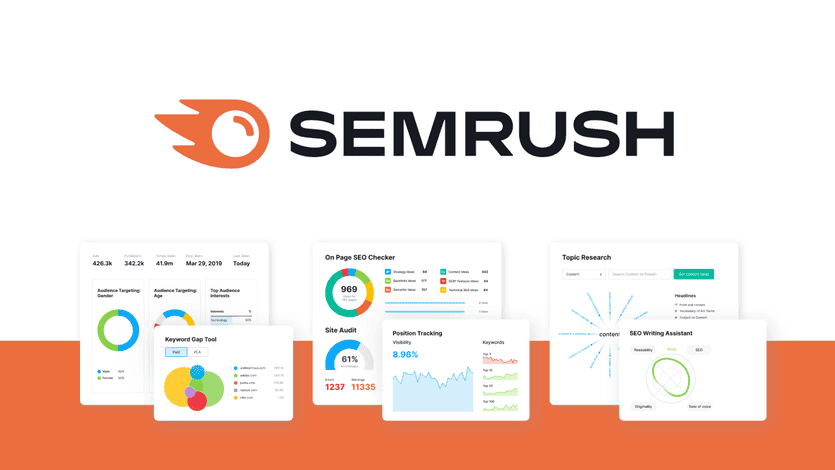
Think of Semrush as that overachieving friend who runs marathons, speaks six languages, and somehow still has time to meal prep. It does keyword research, tracks rankings, audits your site, analyzes backlinks, helps with content marketing, and probably makes you coffee if you ask nicely enough.
Are you bold enough to ask politely?
Currently, Semrush offers pricing starting at $139.95 per month for the Pro plan, with options scaling up based on your needs.
Similarweb: The Traffic Stalker (In the Best Way Possible)
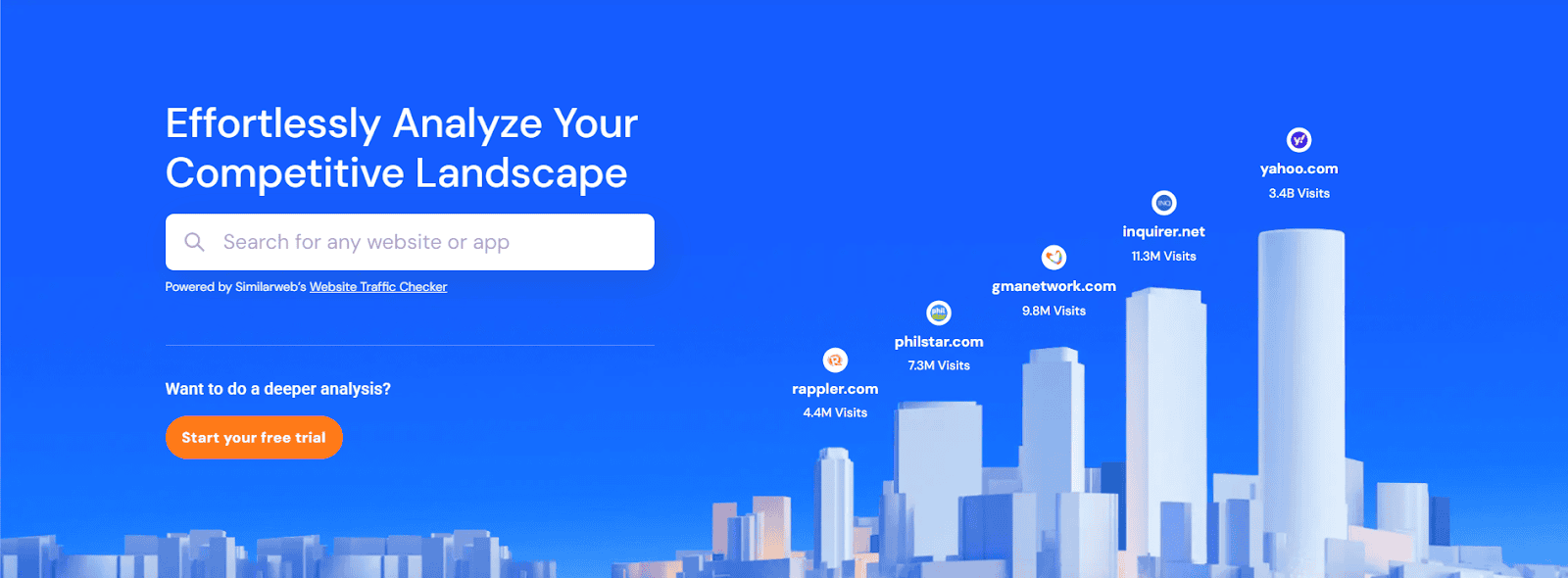
Founded in 2007, Similarweb is a digital intelligence platform that helps businesses analyze competitors, uncover market trends, and optimize their online strategies.
If Semrush is a Swiss Army knife, Similarweb is a high-powered telescope pointed directly at your competitors’ websites (believe me).
It’s obsessed with traffic data, where visitors come from, what they do on competitor sites, and market intelligence that makes you look like a strategy meeting genius.
Similarweb pricing starts at $199 per month or $1,500 annually for the Web Intelligence Starter plan.
Great Adult Masquerade About Semrush vs Similarweb
Here’s what nobody tells you: comparing Semrush vs Similarweb is like comparing a toolbox to a magnifying glass.
Okay, pull up a little; a toolbox and a magnifying glass? I mean it.
Semrush wants to help you BUILD better SEO.
Similarweb wants to help you UNDERSTAND the competitive landscape.
Different goals, different results, different crying sessions when you realize you picked the wrong one.
I figured this out after spending three weeks trying to use Similarweb for keyword research.
Mon Dieu, what a disaster. It’s like using a microscope as a hammer. Sure, you can try, but why would you do that to yourself?
Keyword Research: Where One Tool Absolutely Destroys the Other
Semrush Keyword Research: The Nuclear Option
Let’s talk numbers because they don’t lie (unlike my ex, but that’s different therapy).
Semrush has a massive database with over 20 billion keywords and 20 million content ideas for each word, with frequent data updates. That’s not a typo. BILLION with a B.
When you search for a keyword in Semrush, you get:
- Search volume (obviously)
- Keyword difficulty score
- CPC data
- SERP features
- Top 100 ranking pages
- Related keywords that actually make sense
- Question-based keywords (hello, featured snippets)
Semrush provides keyword data from more than 142 countries, so if you’re targeting local markets, you’re covered like a warm blanket on a cold Tuesday.
Last month, I used Semrush to find long-tail keywords for a client’s SaaS blog. Found hundreds of opportunities with difficulty scores under 30 and decent search volume. Wrote content targeting those keywords. Three of them hit page one within six weeks.
That’s what I’m talking about.
Similarweb Keyword Research: Good, But Not Great
Unfortunately, Similarweb’s geo database is much smaller than Semrush’s, covering only 90 countries.
Similarweb shows you:
- Search volume
- Click rate
- Page visits from organic and paid sources
- Keyword difficulty
It’s decent.
It works.
But it’s like bringing a knife to a gunfight when Semrush shows up with an entire arsenal (not the FC club).
The juicer part?
Similarweb charges extra for access to geo data, audience insights, and traffic metrics, while Semrush Pro customers can view and download this data at no additional cost.
Winner: Semrush, and it’s not even close.
Traffic Analysis: Similarweb’s Moment to Shine
Okay, time to give Similarweb its flowers because it absolutely crushes in this category.
Why Similarweb Wins Traffic Analysis
Remember when I said Similarweb is like a telescope pointed at competitors?
This is where that analogy makes sense.
Similarweb provides website performance data, including traffic sources, for over a billion websites and over 8 million apps. Semrush? Only has data from 808 million websites with no app data.
When you plug a competitor’s URL into Similarweb, you get ridiculous detail about:
- Total traffic estimates
- Traffic sources (organic, paid, social, referral, direct)
- Geographic breakdown
- Audience demographics
- Engagement metrics (bounce rate, pages per visit, visit duration)
- Top referring sites
- Which social platforms drive their traffic
I once used Similarweb to reverse-engineer a competitor’s entire traffic strategy.
Discovered they were getting 40% of their traffic from one obscure industry forum I’d never heard of.
✓ Joined that forum.
✓ Built relationships.
✔Now I get referral traffic from there too. (Like a boss)
Similarweb is the only tool to offer a ‘Last 28 days’ view for tracking trends in real-time, while Semrush users wait for monthly updates. For PPC and trend analysis, that’s gold.
What About Semrush Traffic Analytics?
Semrush does have traffic analytics through its Trends add-on, but it costs extra and isn’t as comprehensive. It’s like ordering the house salad when Similarweb is serving you a five-course meal.
Winner: Similarweb, hands down.
Backlink Analysis: Semrush Brings the Receipts
If you’re not analyzing backlinks in 2026, are you even doing SEO?
C’est ridicule.
Semrush Backlink Game Is Strong
Semrush’s backlink database is much larger than Ahrefs’ and other similar SEO tools’.
What you get with Semrush:
- New and lost backlinks tracking
- Top anchor texts
- Authority score for referring domains
- Toxic link detection (this saved my ass once)
- Backlink audit that emails you when sketchy links appear
That toxic link detection? Pure magic. I had a client who got hit with a manual penalty because some dodgy link farm pointed 500 spammy links at their site. Semrush flagged them immediately.
We disavowed them. Penalty lifted in three weeks.
Similarweb Backlink Analysis: The Awkward Cousin
Similarweb has backlink analysis, but it’s more high-level. You see referring domains and basic metrics, but it doesn’t have the depth for serious link-building strategies.
It’s like looking at your backlink profile through foggy glasses while Semrush hands you HD goggles.
Winner: Semrush, no contest.
Rank Tracking: Do You Even Need to Ask?
Semrush includes a position-tracking tool to identify top-ranking keywords, ranking positions, and search traffic, pulling data from real Google SERP results.
You can:
- Track rankings daily
- Monitor SERP features (featured snippets, local packs, etc.)
- Compare your rankings with competitors
- Track different devices and locations
Meanwhile, Similarweb doesn’t have a SERP tracking tool at all. You’ll need a separate tool for rank tracking.
Winner: Semrush (Similarweb didn’t even show up to this fight).
Site Audit: Finding What’s Broken Before Google Does
Your website probably has technical SEO issues right now. Don’t feel bad. Everyone’s site is a disaster until you audit it.
Semrush Site Audit
Semrush crawls your site and flags:
- Broken links
- Duplicate content
- Missing meta descriptions
- Page speed issues
- Mobile usability problems
- HTTPS issues
- Crawl errors
The reports are clean, prioritized, and actually tell you HOW to fix things instead of just scaring you with red alerts.
I ran a site audit for a client last month and found over 200 issues. Sounds terrifying, right? But Semrush categorized them by priority. Fixed the top 15 critical errors in two days. Saw a 23% increase in indexed pages within a week.
Similarweb Site Audit
For account-managed plans, Similarweb’s site audit feature checks more technical SEO metrics than Semrush.
But here’s the catch: you need to be on an enterprise-level custom plan. For most people, that’s not accessible.
Winner: Semrush for most users, Similarweb for enterprise teams with deep pockets.
Content Marketing Tools: The Surprise Showdown
Here’s where things get interesting, because Semrush has been quietly building one hell of a content toolkit while everyone’s been distracted by shiny new AI tools.
Semrush Content Toolkit: Your Secret Weapon
I didn’t expect to fall in love with Semrush’s content features, but here we are.
The Content Toolkit includes:
- Topic Finder that analyzes search trends and competitor coverage to surface content ideas
- SEO Brief Generator that creates detailed outlines based on top-ranking pages
- AI Article Generator that drafts SEO-optimized content in minutes
- SEO Writing Assistant that provides real-time optimization tips in Google Docs or WordPress
- Content Repurposing feature to turn articles into social posts or emails
Recently, I used Topic Finder for a client in the fintech space. Entered “personal finance” and got 93 topic clusters with search volume, difficulty scores, and content ideas. Took me maybe 10 minutes to build a three-month content calendar.
The SEO Writing Assistant is legitimately helpful, too.
It integrates with WordPress and Google Docs, giving you real-time feedback on readability, keyword usage, and tone of voice. It’s like having an SEO editor watching over your shoulder, but less annoying.
Similarweb Content Features: What Content Features?
Yeah, Similarweb doesn’t really play in the content marketing space. You can use their data to inform content strategy (like discovering which topics drive traffic for competitors), but there are no content creation or optimization tools.
If you’re building a content operation, you’ll need separate tools alongside Similarweb.
Winner: Semrush by default.
Competitive Intelligence: Similarweb’s Specialty
This is where Similarweb earns its keep and honestly justifies that hefty price tag for the right users.
Similarweb’s Competitive Analysis Features
Similarweb lets you:
- Monitor up to 25 competitors simultaneously
- Track traffic changes in real-time
- See which marketing channels competitors invest in
- Identify their top-performing content
- Discover their affiliate and referral partnerships
- Analyze their display and PPC campaigns
The Competitive Tracker feature is particularly useful.
You can set up alerts for sudden traffic spikes, new backlinks, or changes in keyword rankings across your competitor set.
I use this for a client in the e-commerce space. We monitor eight direct competitors, and last month, Similarweb alerted us when one competitor’s traffic jumped 40% in a week. Turned out they launched a viral social campaign we didn’t know about. We adapted our strategy within days instead of weeks.
Semrush Competitive Analysis
Semrush has solid competitive analysis, too, including:
- Domain vs Domain comparison
- Keyword Gap analysis
- Backlink Gap Analysis
- Traffic Analytics (with add-on)
The Keyword Gap tool is particularly useful for finding keywords competitors rank for, but you don’t. However, Similarweb provides more comprehensive traffic-source breakdowns and audience-overlap data.
Winner: Similarweb for deep competitive intelligence, Semrush for actionable SEO insights.
Pricing Breakdown: Let’s Talk Money, Hun
Let me be brutally honest about pricing because this is where most people make expensive mistakes.
Semrush Pricing 2026
| Plan | Monthly | Annual (Monthly) | What You Get |
| Pro | $139.95 | $117.33 | 5 projects, 500 keywords, perfect for freelancers |
| Guru | $249.95 | $208.33 | 15 projects, 1,500 keywords, content marketing toolkit |
| Business | $499.95 | $416.66 | 40 projects, 5,000 keywords, API access |
Semrush offers a 17% discount on annual billing across all plans. Plus, they have a 14-day free trial that actually lets you test the platform properly.
Similarweb Pricing 2026
| Plan | Price | What You Get |
| Starter | $199/month or $1,500/year | 1 user, 1,000 keywords, 300 websites per industry analysis |
| Professional | Custom pricing | More users, extended historical data |
| Team | $14,000+/year | Team collaboration features |
| Enterprise | Custom | Full platform access |
Similarweb’s Team and Business plans range from $14,000 to $35,000+ per year.
Here’s my issue with Similarweb pricing: Add-ons like AI Traffic, Market Research, and Conversion Analysis are available separately, which means your “starting price” is never your actual price.
Real Cost Comparison: What I Actually Paid
For my experiment with both tools, here’s what I spent:
Semrush Guru Plan (annual): $2,499.60
Similarweb Starter Plan (monthly, because I’m impulsive): $1,592.00
Total damage: $4,091.60
Could I have achieved the same results with just Semrush? Absolutely.
Do I regret the Similarweb subscription? Not entirely, because I learned which scenarios actually need that level of competitive intelligence.
Winner: Semrush for value, especially if you’re not an enterprise.
Integration Game: Who Plays Nice with Your Stack?
Semrush has more integrations than Similarweb, including Zapier, Google tools, WordPress, and dozens more.
I’ve connected Semrush to:
- Google Analytics
- Google Search Console
- Google Data Studio
- WordPress (game-changer for on-page optimization)
- Trello (for content planning)
Similarweb integrates well with CRMs and business intelligence tools, but the selection is narrower.
Winner: Semrush for flexibility.
User Interface: Which One Won’t Make You Rage-Quit?
Truth time: both tools have complicated interfaces because they do complicated things.
Similarweb offers a user-friendly interface that is easy to navigate and provides a simplified, user-focused experience, especially for beginners.
Semrush offers a comprehensive suite of features, but with so many tools, the interface can get complex, which can be overwhelming for people new to marketing, making it a tool with a steep learning curve.
But here’s the thing: you’re not going to stay a beginner forever.
Once you learn Semrush, you’ll appreciate how powerful it is. Similarweb stays simple, which is great until you need depth.
I spent my first week with Semrush feeling like a lost puppy. By week three, I was navigating it like a pro. By month two, I couldn’t imagine working without it.
Winner: Similarweb for beginners, Semrush for people willing to climb the learning curve.
AI Visibility Tracking: The New Frontier

Here’s where both tools are evolving to meet the ChatGPT era, and honestly, it’s fascinating to watch.
Semrush One: AI Search Visibility
Semrush recently launched Semrush One, which includes AI visibility tracking across platforms like ChatGPT, Perplexity, Gemini, and Google’s AI Overviews. Pricing starts at $199 per month.
This feature tracks:
- Brand mentions in AI responses
- Sentiment analysis in AI-generated content
- Keyword and prompt tracking across AI platforms
- Competitive positioning in AI search
I tested this for a B2B SaaS client. Discovered their brand was mentioned in AI responses 18% less than competitors, even though their SEO rankings were higher. That insight completely shifted their content strategy.
Similarweb AI Search Intelligence
Similarweb also offers AI search visibility tracking, quantifying how often your brand appears in AI responses compared to competitors.
The difference?
Similarweb focuses more on market share and traffic from AI platforms, while Semrush focuses on optimization opportunities.
Winner: Tie, depends on whether you want insights (Similarweb) or actionable optimization (Semrush).
Mobile App Analytics: A Clear Winner
If you need app analytics, this decision becomes ridiculously easy.
Similarweb provides mobile app intelligence for over 8 million apps, including:
- Download estimates
- Daily active users
- Retention rates
- Competitive app benchmarking
- Revenue estimates
Semrush has exactly zero app analytics features.
Nada. Nothing. Rárá. Nothing dey’.
If your business includes mobile apps, Similarweb is non-negotiable.
Winner: Similarweb (Semrush doesn’t compete here).
Big Boys Talk: Which Tool for Which Person?
You Should Get Semrush If:
- You’re focused on ranking higher in search results
- Keyword research is a priority
- You need comprehensive SEO tools in one place
- Link building matters to your strategy
- You want rank tracking and site audits
- Budget matters (it’s cheaper for what you get)
- Content marketing is part of your strategy
You Should Get Similarweb If:
- Competitive intelligence is your main goal
- You need deep traffic analytics
- Understanding market trends matters more than ranking
- You’re in B2B sales or market research
- Your company can afford enterprise pricing
- You care more about traffic sources than keywords
- Mobile app analytics are essential
You Might Need Both If:
- You’re an agency managing multiple clients
- Budget isn’t a concern (must be nice)
- You need both tactical SEO and strategic intelligence
- You’re in a highly competitive industry
The CrawlWP Advantage: Why You Might Not Need Either
Plot twist: you might not need to choose between Semrush vs Similarweb at all.
Here’s something I discovered while working with these 2 tools: CrawlWP offers some seriously underrated features that overlap with what you’d use these expensive tools for.
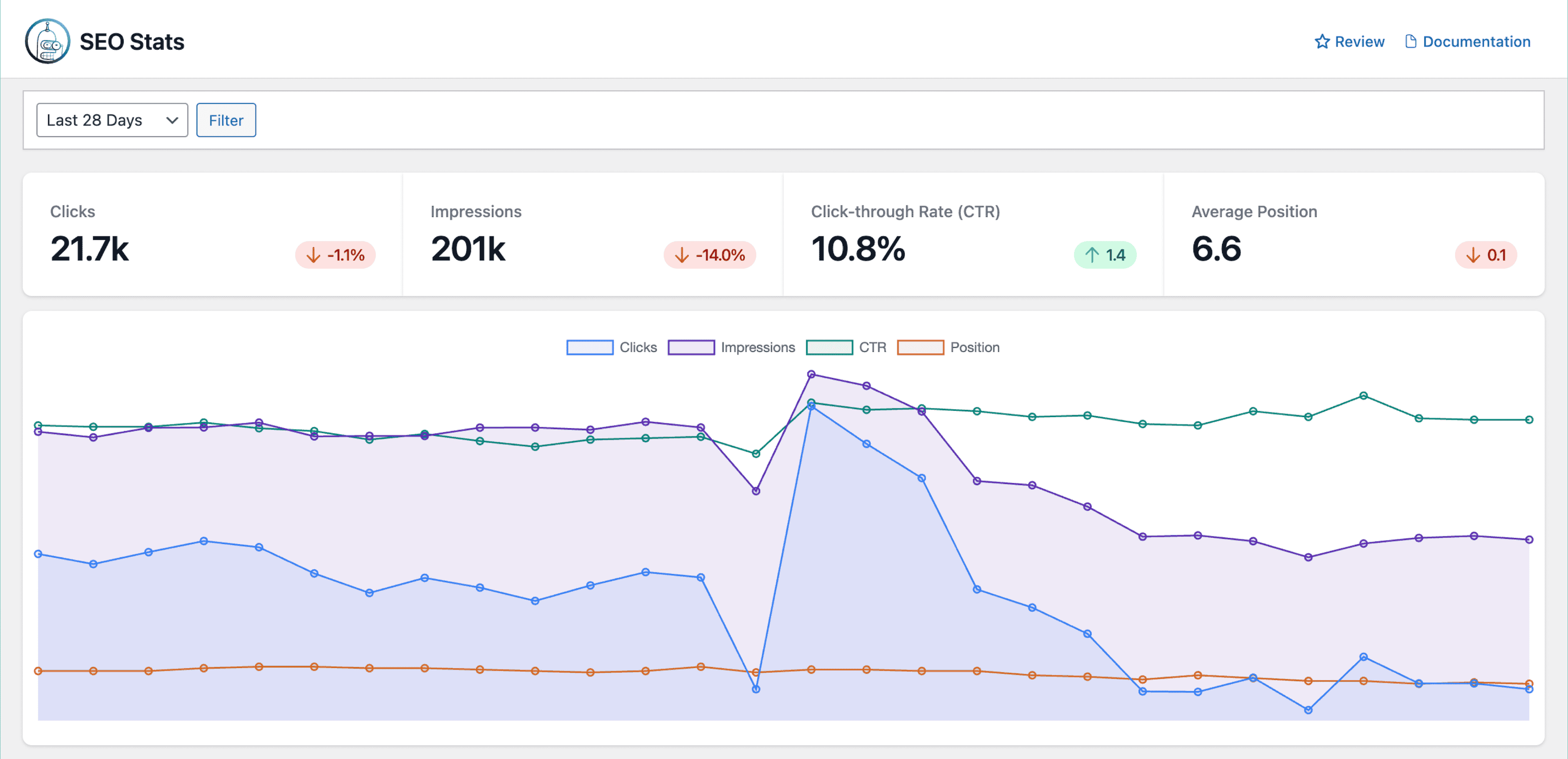
CrawlWP’s SEO Stats Feature
The SEO Stats feature in Crawlwp gives you essential SEO metrics right inside WordPress. You can:
- Monitor your site’s SEO health
- Track indexing status
- Get actionable insights without leaving your dashboard
For smaller sites or solo bloggers, this might be all you need before investing in Semrush.
CrawlWP’s SEO Indexing Feature
The SEO Indexing feature helps you understand and manage how Google indexes your content. It’s like having a mini technical SEO tool built into your workflow.
I use CrawlWP for quick checks before diving into Semrush for deeper analysis.
Saves me time and clicks, which honestly matters when you’re managing multiple sites.
Think of it like this: Crawlwp handles your day-to-day SEO monitoring, Semrush handles your strategic campaigns, and Similarweb handles your competitive research. The three can actually work together beautifully if you’re smart about it.
Final Verdict: Stop Overthinking This
After years of using both tools and spending way too much money learning this lesson, here’s my final take:
Semrush vs Similarweb isn’t a fair fight because they’re solving different problems.
If you want to rank better in search engines, improve your SEO, and have a comprehensive toolkit for digital marketing, get Semrush. It’s cheaper, more feature-rich, and actually helps you DO the work rather than understand the landscape.
If you’re obsessed with understanding market dynamics, analyzing competitor traffic patterns, and need strategic intelligence for business decisions, get Similarweb. It’s excellent at what it does.
For most content creators, bloggers, and small businesses, Semrush is the smarter investment. Pair it with tools like CrawlWP for WordPress-specific SEO needs, and you’re set.
Don’t make expensive mistakes.
Pick the tool that matches your actual goals, not the one some guru told you to buy.
Now, if you’ll excuse me, I need to go cancel one of these subscriptions.
FAQs
Is Semrush worth the money?
Yes, if you’re serious about SEO. Semrush has a much larger keyword database, more features, and is cheaper than Similarweb. For the price, you get incredible value compared to buying multiple point solutions.
Which has better keyword research, Semrush or Similarweb?
Semrush, period. Semrush has over 20 billion keywords compared to Similarweb’s 5 billion, plus better metrics for keyword difficulty, CPC, and SERP analysis.
Can I use Similarweb for SEO?
You can, but it’s not ideal.
Similarweb’s focus is on broader topics like website traffic analysis, audience insights, industry intelligence, and market research rather than pure SEO. Use it for competitive intelligence, not as your main SEO tool.
Do I really need both tools?
Probably not.
Most people need ONE tool that matches their primary goal. Are you trying to rank? Semrush. Are you trying to understand competitive traffic? Similarweb. Don’t fall for the “professionals use everything” trap as I did.
Which tool has better traffic data accuracy?
A SparkToro study found that Similarweb was the most accurate and closely aligned with Google Analytics data by at least 30%. For traffic analysis, Similarweb wins on accuracy.
Does Semrush have a free trial?
Yes, Semrush offers a 7-day free trial for Pro and Guru plans. Similarweb also offers a 7-day trial, but it’s very restrictive because it only lets you perform 15 tasks per day.
Can I track rankings with Similarweb?
No, Similarweb doesn’t have a SERP tracking tool. You’d need to use another tool alongside it for rank tracking, which defeats the purpose of an all-in-one solution.
Which tool is better for agencies?
Depends on what you offer. SEO agencies will love Semrush for its comprehensive toolkit. Digital marketing agencies focused on strategy and market intelligence might prefer Similarweb. Many agencies use both but pass the costs to clients.
What about Ahrefs vs Semrush vs Similarweb?
That’s a whole different comparison, but quick take: Ahrefs is strongest for backlink analysis, Semrush is strongest for all-around SEO, and Similarweb is strongest for competitive traffic intelligence. Pick based on your primary need.
Can Semrush replace Google Analytics?
No.
Semrush estimates traffic based on keyword rankings and search volume. Google Analytics tracks actual user behavior on your site. They serve different purposes and should be used together.
Ready to make your decision? Try Semrush’s 14-day free trial and see if it fits your workflow. Or check out CrawlWP’s features first to see if you can solve your immediate SEO needs without the premium price tag.